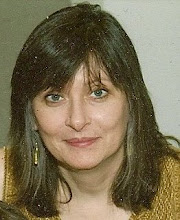
Whenever non-homeschoolers find out that I’ve homeschooled the Nikipedia for the past 8 years, I immediately get one or both of the following questions: What about socialization? and, How did you know what to teach? The first question is usually asked by someone who has just spent a lot of time complaining about peer influence on their kids, disinterested, crazy or cruel teachers, etc., so I’m usually able to answer, “Yes, I’m so glad she’s avoided most of that.” The second question always leaves me square mouthed.
Why? Because it’s invariably asked by a college educated adult, often one with many years of post- graduate study. Holy baccalaureate, Batman, if you’ve spent more than 16 years in the halls of academe, you should have some idea what you found valuable to study, some grip on the basics of at least an elementary school education, and some ability to organize information into a logical order. Add to that the amount of sample syllabi online, the plethora of educational materials catalogs that are often as thick as phonebooks (particularly if they’re peddling to homeschoolers), and I don’t think it should take a parent all that long to come up with some direction. How on earth do the same parents judge whether they are happy with the education their children are receiving in regular schools?
My guess is that most parents don’t think so much about what content their child is learning so much as whether said offspring is “doing well” according to the school’s standards. Maybe if the child starts zooming through math or gets in trouble for inserting a more interesting, higher level book inside the duller, dumber book the class is reading, the parent will get an inkling that the child needs more challenging material. By the time college application season rolls around, some parents will start to seek lists of 100 books Every High Schooler should have read.
There’s a minor industry, however, in books about books, telling us what we should have read in high school, college, and most of our adult life, instead of being the slackers that many of us were. Because the Nikipedia was bored with kid’s books by about sixth grade (except for science fiction and an 8 foot shelf of Star Trek novels she bought at a used book sale), I’ve acquired quite a collection of these books on great books. In case anyone else has many spare hours that they can’t think what to do with, or actually might consider homeschooling, I offer this review. Beats Cliff’s notes.
The granddaddy of the genre has to be Clifton Fadiman’s The New Lifetime Reading Plan. Fadiman has been dead for 10 years, and the book was updated by John Major, especially to include non-Western literature. A lot of people have objected to the revisions, but I am so grateful to finally have solid suggestions for something not written in Europe. I find the summaries to be a bit short, however, and not all that opinionated or thought provoking. Still, it’s a good catalog to order from, so to speak. Definitely a book shelf basic.
Susan Wise Bauer has a collection aimed at adults who would like to self-educate, The Well-Educated Mind. Bauer wrote a homeschooling war horse that we have followed more or less closely for curriculum suggestions over our homeschooling career, The Well-Trained Mind. WTM is definitely aimed at parents trying to think through what to teach, but I suspect Well-Educated is for all those parents who took a look at WTM, gulped, and decided their own education was woeful. Bauer treats great lit by genre (WTM works through it chronologically by subject, which I prefer, actually) and is heavy on the ancients, although she does include some modern literature as well. I’ve enjoyed owning both of these, but I’d browse them at the library to see if you need all the background instruction in how to read each genre. Otherwise, you may just want to note her suggestions.
Book Smart is billed as “Your essential reading list for becoming a literary genius in 365 days”. I like this one, but I suspect it’s because I’ve read a lot of the books she suggests and so I feel smart and smug. Jane Mallison has organized her lists by month, and given each month a theme. She has some good advice on how to work your way through the list and which ones to choose (way more than I could possibly get through in one 365 day period and I read pretty quickly). All of the selections are fiction, and most are Western. However, the non-Western works are terrific, and she includes two of my favorite lesser known authors, Sigrid Undset and Naguib Mahfouz (both Nobel prize winners). Nice book for ideas, but not, and not intended to be, a comprehensive compendium.
A great one for browsing in the little room is Steven Gilbar’s Good Books, which really is a compendium of books that you should have read, have read, never heard of but want to read now, etc. Good Books has plenty of info for non-fiction selections, and is organized by topics (e.g., the World, Society, Work, Nature, etc.). I stuck so many post-its in this one that it looks like a porcupine, and you never want to have this in the same room as you have access to Amazon. Each description is only a few sentences, but it was enough to do me in.
I’m not a huge fan of Michael Clay Thompson’s homeschooling books, but I really enjoyed Thinkers. This consists of essays on why you should want to read the 20 books discussed: literature, history, and science, for the most part, with satisfying discussions of each book. You’ll feel compelled to read them all, and wish for a sabbatical to do so. BTW, I'm not including a link for this one, as Amazon only has a listing for it at $100. Geez, it's a small paperback. Try to get it from the library.
David Denby makes me crazy with Great Books. It recounts his effort to go back to Columbia, attend their core curriculum classes, and re-read all the books he had first read when he attended college there 30 years earlier. As I’ve said before, education is so wasted on the young, but this guy made a book of taking that literally. I got through about 96 pages until I realized I have to read or re-read along with him, and boy that’s a big project. If you want to embark on a similar project, or just look up what he has to say on the books he covers, I can’t imagine a more entertaining companion. Definitely a personal vision.
Invitation to the Classics is beloved of homeschoolers, although more so with those of the conservative Christian stripe. I’ve found it to have very useful summaries and backgrounds on the authors and their time periods, but I think the authors have sometimes selected lesser works by great authors. It includes college-type discussion/essay questions, but they nearly all ask you to think of these works as a Christian, or what would Christians do. I suppose how you define Christian will have something to do with your answers. I’m still wondering what a “Christian world view” is, and I don’t think Jesus joined the Republican party, but what do I know? Not a bad reference work to inflict on your high school age child, with some lively discussions possible.
If you can dig it up used, Gail Thain Parker’s book College on Your Own is a great edition to refer to. Parker kicked up quite a bit of controversy while she was (briefly) the 30-something president of Bennington, but this is a very serious look at the basics (and then some!) of various fields of college study. It’s dated (1978) and contains a lot of really dull books, but it’s great for a glimpse at what you might read if you had majored in the subject (or have a child who’s thinking about the major). That said, I majored in Sociology at just about this time, got a stellar Graduate Record score, and read maybe 25% of the books suggested. But I do feel guilty. You can, too.
Beowulf on the Beach (Jack Murninghan) is one I just picked up last week. It’s highly opinionated and personal. So far I’m not totally in sync with what he likes and dislikes, but he is funny. It’s pretty clear that he’s a lot younger than most of the people who do these greatest hits books, and it’s nice to see that sort of take on some of these hoary chestnuts. No non-Western stuff (he says it’s beyond him to compile). I really appreciate that he’s willing to wade through some looong works that I’ve always meant to get to (Canterbury Tales, Decameron, etc.) and picked out the “good parts”. I think the Nikipedia will also appreciate some abridgement in her assignments.
A sub-genre of books-about-books is writers-about-books. In this category, I’ve enjoyed the following for browsing (haven’t read them thoroughly).
The Top Ten, edited by J. Peder Zane, allows you to look up what an awful lot of contemporary writers like. There was apparently great agreement on some books, but many writers mention some very offbeat but interesting selections, and quite a few contribute memoirs and appreciations. Nice book for a Sunday afternoon.
Francine Prose (no slouch herself at the book production biz and is that a perfect name?) tells you how in Reading Like A Writer. While this is a very different format than the other books I’ve mentioned (the chapters focus on how to improve your writing, with examples from great books), she does provide a neat list of “books to be read immediately” at the end. You’ll have to read the rest of the book to find out why. This would be a great companion to a reading program (or high school class) introducing reading from a more skills oriented perspective; call it creative writing through literature.
Finally, A Passion for Books is one I’ve enjoyed for its often thought provoking essays by prominent literati about books, experiences, and just general book amour. It’s another one for the little room or in bed for nights when you really should already be asleep, as most of the essays are just a few pages long.
Okay, if you’ve read this far, I get to gripe a little. What about modern works, and I don’t mean Hemingway and Faulkner? Can’t someone stick their neck out a little and pick something less than 50 years old? Gosh, maybe I’ll write one myself. And another thing, what about creative non-fiction? Tracy Kidder, John McPhee, Peter Matthiessen, M.F.K. Fisher…?
But, as they say, that’s a story for another time.
Showing posts with label Homeschooling. Show all posts
Showing posts with label Homeschooling. Show all posts
Monday, September 28, 2009


Monday, July 20, 2009
Buy Homer, not a Hummer
Recently I heard a school librarian and a reading specialist discuss what kids are reading. It’s enough to chill the bones of any author. I don’t mean only serious children’s authors who have to compete with the likes of Captain Underpants. Adult authors, too, have plenty to worry about. Looks to me like serious writers might need to worry that they’re about to follow newspapers down the sink hole.
According to these women, historical fiction is out. Kids just don’t get enough history in K-8 to have a context in which to place these stories. The organization, content and expectations are just pitiful. Here’s what one local school system does:
3rd Grade: Early Illinois history
4th Grade: Geography
5th Grade: More geography and U.S . History through the Civil War (if we’re lucky, commented the librarian)
6th Grade: Prehistory to Ancient Rome (okay, I’m on board here)
7th Grade: back to Geography
8th Grade: U.S. Government and U.S. History from Reconstruction to the Cold War
Why on earth kids need so much geography, and why it can’t be taught in the more meaningful context of history, is beyond me. At my house dear daughter never studied geography as a separate subject (oh, okay, she did some workbook pages on Fridays in 3rd & 4th grade) until 8th grade, when dd took AP Human Geography, easily passing with a 5. What’s missing from the above curriculum? How about all of European, Middle Eastern and Asian history, with only a smidgen of African history thrown in for political correctness?
By 8th grade, some kids have discovered historical fiction on their own, but the bulk of their early reading is focused (according to these speakers) on fantasy, relationships series (if girls) and horror (if boys). Also, the classic children’s books of the past have either been moved up to high school, being too long with too difficult vocabulary, or eliminated all together, being at odds with modern political correctness. In high school it’s better—our local high school requires 4 history or social studies courses, and a judicious choice can get some pretty good survey courses. Too bad it’s their first encounter.
I firmly believe in the “inoculation” theory of education, by which I mean, you give kids a shot of something several times over a period of years, and eventually that exposure strengthens their bodies’ response to the stimulus. The kid who read a picture book of the Odyssey in 1st grade and a retelling in 5th grade will be raring to go on the real thing by high school (not bored out of their gourds, as my daughter observed at a local high school class.)
Grappling with serious literature, classics, and lengthy works only becomes easy with exposure and training. The child who is exposed to the arts early on, in a meaningful context, by a teacher (or parent) who is knowledgeable and enthusiastic, will be a lifelong fan—at least an appreciative audience if not a creator.
All the stats show that newspapers have failed to reach a younger audience, who has never developed the habit of reading the morning paper (or the afternoon one, remember those?) But ultimately, we as parents and we as artists can’t leave it up to the schools. As an old poem says, children learn what they live. Children who see us anticipating concerts with enthusiasm, reading challenging books, and actually using our museum memberships for our own adult benefit will have a whole different cultural vocabulary from those whose evenings are spent watching reality tv. If only we valued season tickets to the opera as highly as we value ownership of a Hummer.
Friday, July 17, 2009
Nag, nag, nag!
When my daughter was first taking music lessons (piano) her first teacher wisely told me that she had never seen a student progress well without a parent who kept on them. Since I vacillate between being a drill sergeant and a pushover, I never quite got my nagging program in gear. As might be expected, piano progress was so-so.
However, when she began harp lessons, I was convinced that I might as well throw $55 out the window, and my nag switch opened full throttle. Besides the fact that harp turned out to be “her” instrument (see my post on harps), she readily admits that without the...er...motivation I supplied she never would have made the progress she has.
It strikes me that as teachers and learners, we really should just admit something to ourselves and our students: some things just aren’t fun to learn. Fields that require memorization or significant practice to master are going to have a huge quantity of things you have to beat yourself into doing: the foundations of music, math and foreign languages are, let’s say it, dull and repetitious. No amount of cute computer animation or music enhanced audio flashcards, or any of the other tricks we try really make a difference. Expecting a child to have the discipline needed is unrealistic. Someone else, someone who can visualize the long term benefits, needs to supply the superego.
As I used to pound into my daughter, memorizing the 2500 or 3000 words needed to read a French newspaper is no fun, but being able to pick up a French language fashion magazine or make yourself understood while travelling is a lot of fun indeed. Getting to the fun part, at least in some fields, requires a significant amount of grinding away. For me, and for her, the study of literature or history has been intrinsically pleasurable, because it exercises the brain, but requires no particular skill building exercises once you’ve learned to read. But not so with math, languages, music and advanced art: it’s practice, review and memorize for a long time before you can think big thoughts or work with anything interesting.
“Child-led learning” sounds great and is certainly a popular concept in both traditional and homeschool settings. I wish I believed in it. I wish my child had known what she wanted to do and pursued it wholeheartedly at an early age. I wish I could fly. While I recognize that there are kids like that somewhere on the planet, I think it’s a disservice to expect all of them to be that way, or to wait until they are. How could a child discover a passion for Javanese gamelan (or harp) if she was never exposed to that possibility? So, until I’m confident that she can drive herself, I still direct the tour.
However, when she began harp lessons, I was convinced that I might as well throw $55 out the window, and my nag switch opened full throttle. Besides the fact that harp turned out to be “her” instrument (see my post on harps), she readily admits that without the...er...motivation I supplied she never would have made the progress she has.
It strikes me that as teachers and learners, we really should just admit something to ourselves and our students: some things just aren’t fun to learn. Fields that require memorization or significant practice to master are going to have a huge quantity of things you have to beat yourself into doing: the foundations of music, math and foreign languages are, let’s say it, dull and repetitious. No amount of cute computer animation or music enhanced audio flashcards, or any of the other tricks we try really make a difference. Expecting a child to have the discipline needed is unrealistic. Someone else, someone who can visualize the long term benefits, needs to supply the superego.
As I used to pound into my daughter, memorizing the 2500 or 3000 words needed to read a French newspaper is no fun, but being able to pick up a French language fashion magazine or make yourself understood while travelling is a lot of fun indeed. Getting to the fun part, at least in some fields, requires a significant amount of grinding away. For me, and for her, the study of literature or history has been intrinsically pleasurable, because it exercises the brain, but requires no particular skill building exercises once you’ve learned to read. But not so with math, languages, music and advanced art: it’s practice, review and memorize for a long time before you can think big thoughts or work with anything interesting.
“Child-led learning” sounds great and is certainly a popular concept in both traditional and homeschool settings. I wish I believed in it. I wish my child had known what she wanted to do and pursued it wholeheartedly at an early age. I wish I could fly. While I recognize that there are kids like that somewhere on the planet, I think it’s a disservice to expect all of them to be that way, or to wait until they are. How could a child discover a passion for Javanese gamelan (or harp) if she was never exposed to that possibility? So, until I’m confident that she can drive herself, I still direct the tour.
Subscribe to:
Posts (Atom)